
Leading Living Systems: Foundations of Organisational Development
- Featured
-
By
 sequoia

Leading Living Systems: Foundations of Organisational Development
Develop the mindset, frameworks, and leadership practices needed to guide your organisation as a living, adaptive system — one that thrives amid complexity and drives meaningful change.
This module is for:
Senior leaders, organisational development practitioners, HR directors, and change agents who are responsible for shaping the health, culture, and generative capacity of their organisations. You will gain the foundational frameworks and mindset shifts to address the three critical challenges traditional OD cannot solve: change fatigue from relentless digital transformation pressures, employee resistance as transformation willingness plummets, and top-down technology adoption disconnected from workforce realities.
You will achieve the following outcomes:
- Understand and apply living systems principles to assess organisational health—recognising patterns of vitality and degeneration, and identifying where traditional change initiatives fail in your organisation
- Map the interconnected drivers of organisational flourishing using the 5 Attributes (Awareness, Aspirations, Alignment, Accountability, Authenticity), revealing generative leverage points beyond surface symptoms
- Facilitate dialogic conversations using Appreciative Inquiry that shift stakeholder energy from problem-focused exhaustion to possibility-focused engagement—even in crisis situations
- Make the four critical mindset shifts required to practice Living OD: from problem-focused to possibility-focused, expert-driven to co-creative, intervention to invitation, and compliance to commitment
- Begin building a personal leadership practice grounded in systems awareness and complexity literacy—recognizing how your own presence and leadership approach enables or inhibits organizational regenerativity.
What Makes This Module Unique
- Living Systems Lens
- Dissolving the Transformation Crisis
- Paradigm Shift with Practical Application
Unlike conventional OD programmes that view organisations as machines to be engineered, this module positions every organisation as a living system — complex, self-organising, and inherently purposeful. Participants move beyond linear change models to understand emergence, feedback loops, and system-wide leverage points. This paradigm shift enables leaders to work with the grain of organisational life rather than against it, resulting in interventions that are more effective, more sustainable, and more humane.
Singapore organizations face three converging challenges: (1) change fatigue—change management ranks as the top challenge among senior leaders, with struggles in shifting behaviours; (2) workforce capability gaps—while 83% of SMEs have digital strategies, less than half implement them successfully, and 93% of employers report employees lack necessary digital skills; and (3) implementation disconnects—SMEs purchase enterprise tools but lack expertise to implement them effectively. Living OD dissolves these challenges by working with organizations as living systems: building capability while implementing change, cultivating internal regeneration rather than imposing external fixes.
This isn’t theoretical philosophy. You’ll experience the shift from diagnostic to dialogic approaches through experiential exercises and real-world case applications. The programme bridges academic rigor (living systems theory, Appreciative Inquiry, systems thinking) with immediate usability—every framework comes with practical tools you can deploy the next day.
This module is stackable towards the Practitioner Certification for Organisation Development.
What you will learn
Learning Journey Overview
Over two intensive and experiential days, participants move through a carefully sequenced journey — from building foundational literacy in living systems and complexity, to applying integrated frameworks for organisational diagnosis and development, to cultivating the personal leadership practices required to sustain systemic change over time. By the close of the programme, participants will be equipped with both a rich conceptual map and a practical toolkit for leading their organisations as living, adaptive systems — and will have begun the deeper inner work that makes such leadership possible.
Key Topics & Skills
- History & Evolution of OD
- Diagnostic versus Dialogic OD
- The Regenerative OD Cycle for Process Consulting
- Ontological Skills for Living OD - Thinking, Doing, Being, Relating
- Assessing for OD Effectiveness - OCTAVE tool
- Ontology of the OD Practitioner (Self as Instrument)
Learning Format
The programme combines facilitated conceptual sessions, reflective practice, small-group dialogue, case-based application, and experiential exercises drawn from systems thinking, somatic awareness, and appreciative inquiry. Participants engage not only as learners but as a living system themselves — experiencing firsthand the dynamics they are studying. Pre-work (readings and a brief organisational reflection) and post-programme peer accountability structures ensure that learning is integrated and applied in participants’ own contexts.
About the Facilitators
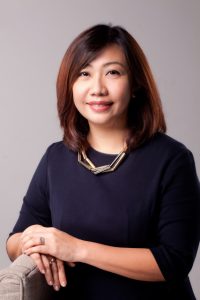
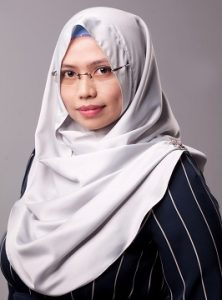
Our facilitators are senior practitioners and researchers in organisational development, systems leadership, and sustainability — each bringing over 15 years of experience working with complex organisations across Asia and beyond. They combine academic rigour with deep practitioner wisdom, holding space for both intellectual inquiry and personal transformation.
Details & Enrollment
Next Session Date: TBC
Location: Sustainability Institute, Singapore (venue details provided upon registration)
Session Time: 9:00 AM – 5:30 PM
The session will run with a minimum of 12 participants.
If you have any questions or are interested to find out more,